
The most common symbols in heraldry and what they mean
Open any book of British heraldry and you’ll find the same figures again and again: lions and eagles, stags and boars, dragons and griffins, crosses, roses and stars. In heraldry these figures are called charges, meaning anything placed on the shield.
Each charge has a traditional meaning, and it’s a pleasure to learn them. One honest note first. Medieval families rarely wrote down why they chose a charge. Many meanings were attached by later writers, and a great many charges were chosen for a much simpler reason, which we’ll come to at the end. Read the meanings as tradition, not as a coded message from your ancestors.
Beasts: the lion, the stag and the boar
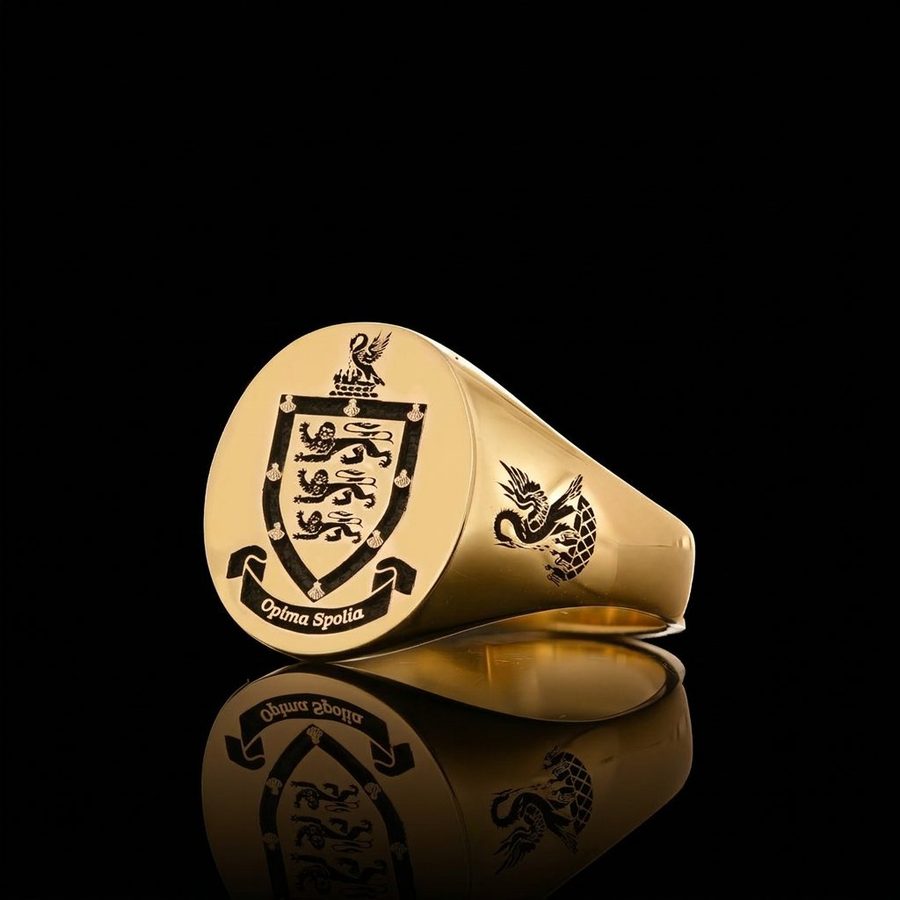
The lion is the king of heraldry, standing for courage, strength and royalty. It’s the most common beast in British arms, from the three lions of England to the red lion rampant of Scotland. Its pose changes the look entirely. Rampant, rearing up with forepaws raised, it’s ready to fight. Passant, walking with one paw raised, it shows calm authority. (Our guide to reading a blazon explains the poses.)
The stag is a quieter beast, linked with peace and dignity. It appears often in Scottish and Irish arms, where the deer of the hills and woods were part of everyday life. The boar is its opposite: a creature known for turning to fight rather than flee, and so a sign of a fierce defender. It’s the crest of the Campbells and appears in many Highland arms.
The wolf, the bear and the horse all appear too, along with the greyhound, the talbot (an old hunting hound) and the bull.
Birds: the eagle, the martlet and the swan
The eagle is the lion’s equal among birds, standing for vision and high authority. It was the emblem of Rome and of the Holy Roman Empire, and it’s often shown displayed, with its wings spread wide across the shield.
The martlet, a small bird drawn without feet, is one of the most common charges in English heraldry. Tradition says it never lands, and it has come to stand for the younger son who must make his own way. It’s also the mark of the fourth son in English cadency. The swan, the falcon, the raven and the cock all have their own places too.
Creatures of legend: the dragon, the griffin and the unicorn
Heraldry has always made room for beasts that never walked the earth.
The dragon is a fierce guardian. In Wales it’s far more than that: the red dragon is the national emblem, flown on the Welsh flag and linked with Welsh kings back to the early Middle Ages. The griffin has the head, wings and forelegs of an eagle and the body of a lion, and so it combines the strengths of both, vigilance and courage together. The unicorn, untameable and pure, is Scotland’s national animal. It supports the royal arms of Scotland and stands opposite the English lion in the royal arms of the United Kingdom.
The phoenix, rising from the flames, stands for renewal after hardship, and the wyvern, a two-legged dragon, appears in many English arms.
Crosses, crowns and weapons
The cross is among the oldest charges of all, and heraldry knows dozens of forms, from the plain cross to the cross crosslet, the cross moline and the cross patonce. Many families link a cross in their arms to an ancestor who went on crusade. Some of those stories are true, though few can now be proved.
Crowns and coronets often mark royal service or a connection to a kingdom. Swords stand for justice and readiness to defend, and the arm holding a sword or dagger is a favourite crest, especially in Scotland and Ireland.
Plants: the rose, the thistle and the shamrock
Plants carry the identity of the four nations. The rose is England’s flower, its red and white forms recalling the houses of Lancaster and York and the Tudor rose that united them. The thistle is Scotland’s, and the shamrock Ireland’s. The leek and the daffodil both belong to Wales, though they appear more in national emblems than in family arms.
The fleur-de-lis, a stylised lily, came to English heraldry from France, and appeared in the royal arms of England for over four centuries after Edward III claimed the French throne. The oak stands for strength and long life, and the acorn often appears with it.
Stars, crescents and the sun
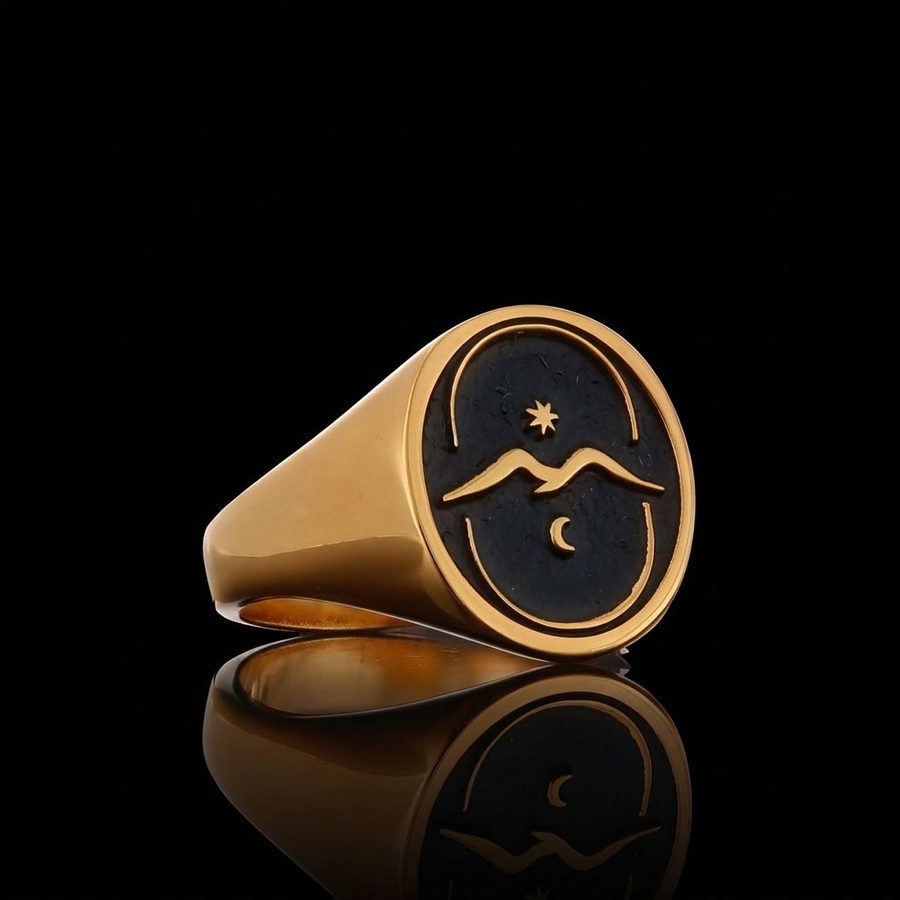
The five-pointed star is called a mullet, originally the rowel of a knight’s spur, and a star with wavy rays is an estoile. The crescent is linked with the moon and with hope, and in English cadency it marks the second son. The sun in splendour, a sun drawn with a face and rays, stands for glory and light.
Canting arms: heraldry’s puns
Here is the simpler reason many charges were chosen. A great many arms are canting arms, meaning they make a pun on the family’s name. The Lucy family of Warwickshire bear three luces, an old word for the pike fish. The Bowes-Lyon family, the family of the late Queen Mother, quarter bows for Bowes with lions for Lyon. Families named Arundel bear swallows, from the French hirondelle. Medieval heralds loved a pun, and if a charge in your arms seems to have no obvious meaning, it may be a play on your name.
Choosing symbols for a ring
Bold, simple charges engrave beautifully on a signet ring. A single lion, a stag’s head or a cross is clear even on a small face, while a full shield of several charges suits a larger ring. If your family has no coat of arms, heraldic symbols can still make a fine personal design: a stag for a Highland connection, a rose for England, a star for a new beginning.
At Clanmalier, every ring is made to order. Tell us your family name, send us your coat of arms, or describe the symbols that mean something to you, and we’ll prepare a design for your approval before we handcraft the ring.